
Custom card sleeves: an artwork, fit, and ordering guide
Plan a sleeve design that reads at card size, check the available options, and order for the deck you actually play.
Start a custom card sleeves order with the deck, not the image. Check the live sleeve options for the cards you use, and count the main deck, sideboard, and tokens you intend to sleeve. Different games and storage setups need different fits; do not assume every sleeve option is interchangeable. If you double-sleeve, check compatibility with your existing inner sleeves before committing. Compare the available pack quantities against that total rather than ordering from a deck-size guess.
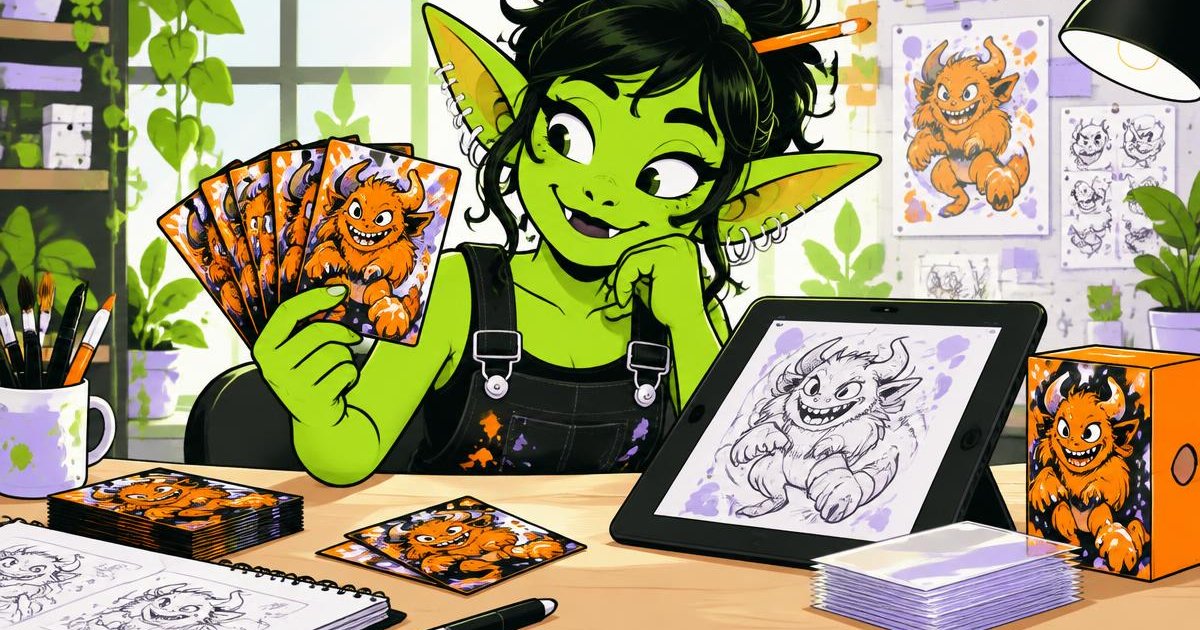
Design for a small, repeated canvas. A bold character, recognizable emblem, or clear pattern stays readable across a hand of cards; a poster covered in fine text usually loses its impact when reduced. Use the highest-resolution original you have, not a screenshot from a social feed. Keep names and faces away from the print boundary and extend the background to the edges. Only upload your own work or art you have permission to reproduce, including permission to print it on physical products.
Select the product options before making your final crop. Review where the artwork meets the edge and whether any important detail has disappeared. Inspect the preview at approximately card size as well as zoomed in: a title that looks readable on a large monitor can become tiny in your hand. Check quantity and the current price, then consider whether your deck box still suits your sleeved deck. The mockup helps check placement, but it is not a guarantee that screen colors and a physical print will look identical.
For organized play, check with the event organizer before buying. Magic's official tournament rules include sleeve requirements and allow judges to assess whether sleeves make cards distinguishable. Custom artwork alone does not certify a deck for tournament use. For everyday play, keep your sleeves consistent, inspect them for damage, and replace worn sleeves that could identify particular cards. A good order is one that fits your cards, keeps the artwork clear, and suits the setting where you will actually use it.