
Custom MTG proxy cards: choose a mode and prepare your artwork
Finished card image or artwork only? A practical guide to the three creation modes, print bleed, and casual-play limitations.
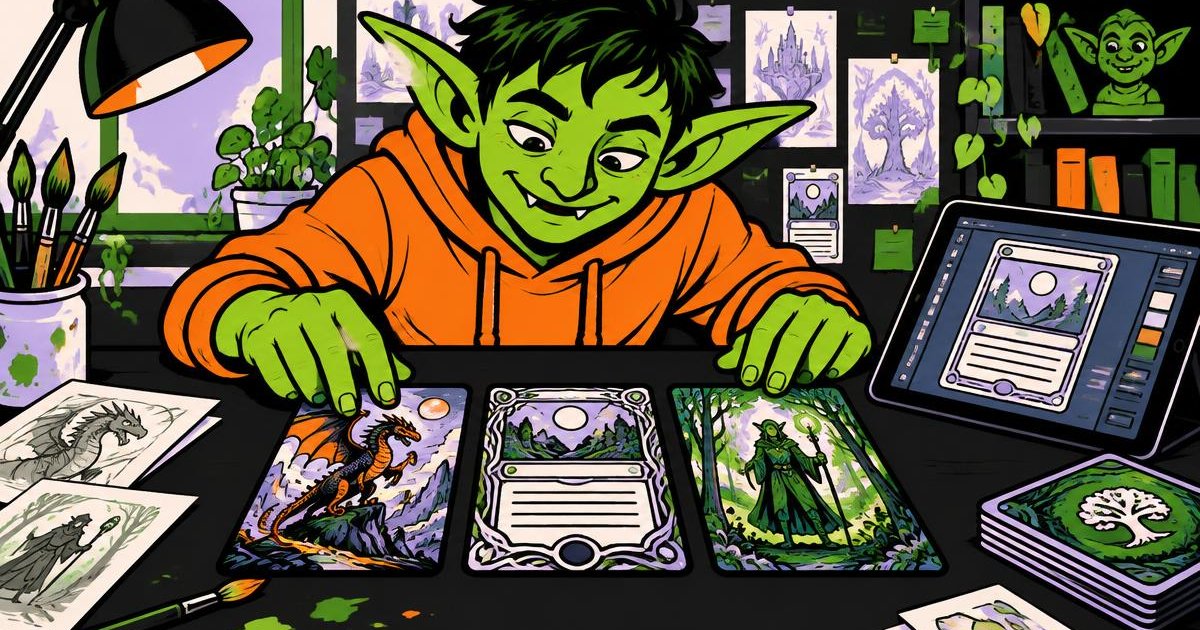
Choose a starting point before designing custom MTG proxy cards. Fully custom is for an already finished card image: the name, rules, frame, and artwork are part of your file. Artwork plus your own text is for an original card idea; choose a frame and enter the details yourself. Artwork plus real card data is for a personal illustration on an existing card; look up the card and its name, mana cost, and rules text are filled in and locked. These routes solve different problems, so use the one that matches what you already have.
For a fully custom upload, prepare an 815 × 1110 px file. That represents a 63 × 88 mm card with 3 mm bleed on every side at 300 DPI. Bleed is extra image beyond the final trim edge, not a decorative border: extend your background into it and keep important lettering inside the final card area. Enlarging a small screenshot does not recover lost detail. For either framed option, start with artwork at least 1000 px tall, then inspect its positioning in the selected frame rather than stretching it to imitate a finished card file.
Before adding to your cart, read the whole card in the preview. Check spelling, mana symbols, line breaks, the artwork crop, and the selected finish and quantity. In the real-card-data mode, confirm that you selected the intended card because its text is locked. Review the reverse side as well as the front, and use only artwork you own or are licensed to print. If you are planning a separate custom display slab, remember that the slab includes neither a card nor professional grading; it is a different product, not a card-printing add-on.
These custom prints are unofficial and intended for casual play and playtesting with your group's agreement. They are not authentic Magic cards, and they are not legal for sanctioned tournaments. Wizards' published proxy policy distinguishes these from the narrow judge-issued replacement proxy used when a card is damaged during an event. Do not sell or describe a custom print as genuine or certified, and ask your playgroup about expectations before bringing one to a game. Clout Goblins is not affiliated with or endorsed by Wizards of the Coast.